A Steam Boiler is a device that generates steam by using thermal energy to convert water into high-pressure steam for industrial processes such as food, beverage, textile, chemical, and energy industries. The main types include Fire Tube, Water Tube, Electric, and Waste Heat Boilers, each suitable for different applications.
If you are looking for the best way to choose the right boiler for your factory, this article serves as a “practical guide” covering principles, types, selection methods, and professional techniques to reduce energy costs.
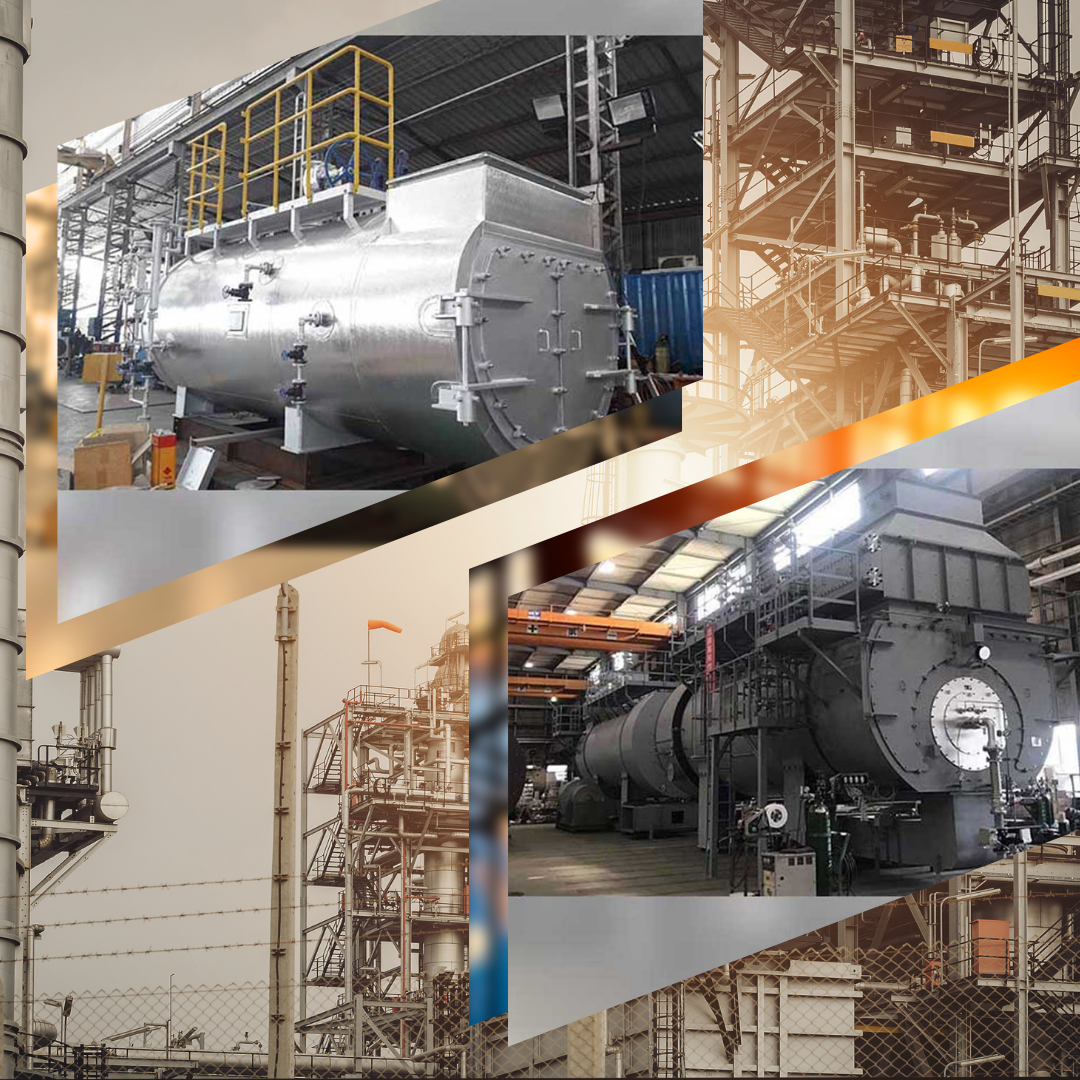
In production systems, “steam” is a key energy source used for processes such as sterilization, temperature control, and power generation.
If the Steam Boiler system is inefficient, it can lead to:
On the other hand, choosing the right boiler can significantly improve productivity and reduce costs.
A Steam Boiler converts “thermal energy → steam energy” through four main steps:
A well-designed system can improve energy efficiency by more than 15–25%.
A boiler where hot gases pass through tubes surrounded by water.
Advantages
Limitations
A system where water flows inside tubes surrounded by heat.
Advantages
Limitations
Uses 100% electricity with no combustion.
Advantages
Limitations
Utilizes excess heat from existing systems.
Advantages
| Boiler Type | Steam Capacity | Overall Cost | Key Features | Suitable Applications |
|---|---|---|---|---|
| Fire Tube Boiler | Low – Medium (Non-continuous load) |
Low (Lower initial investment) |
Simple design, easy installation, low maintenance | Small to medium factories (SMEs) Food & beverage, general industry |
| Water Tube Boiler | Very High (Continuous operation) |
High (Cost-effective long-term) |
Fast steam generation, high pressure, stable performance | Large-scale industry Power plants, chemical, petrochemical |
| Electric Boiler | Low – Medium (Depends on power supply) |
High (Higher electricity cost) |
No combustion, clean, quiet, easy control | Food, pharmaceutical, cosmetic industries Clean room environments |
| Waste Heat Boiler | Medium – High (Depends on available heat) |
Very Cost-saving (Long-term energy reduction) |
Recovers waste heat to improve efficiency | Factories with excess heat Energy, steel, cement, petrochemical |
Q: What is a Steam Boiler?
A: A system that generates high-pressure steam for industrial use.
Q: Which type of boiler is best?
A: It depends on the size and application.
Q: Is an Electric Boiler worth it?
A: Suitable for clean industries but not ideal for heavy loads.
Q: How long does a Steam Boiler last?
A: Approximately 10–20 years.
A Steam Boiler is a critical system in industrial operations. Choosing the right one can reduce energy costs, improve efficiency, and minimize long-term risks.
For the best results, it is recommended to work with experts who can design the system to match your factory needs.
